How to Avoid Common Coin Selling Mistakes
Buy & sellBy Coinzy Editorial Team
· 4 min read
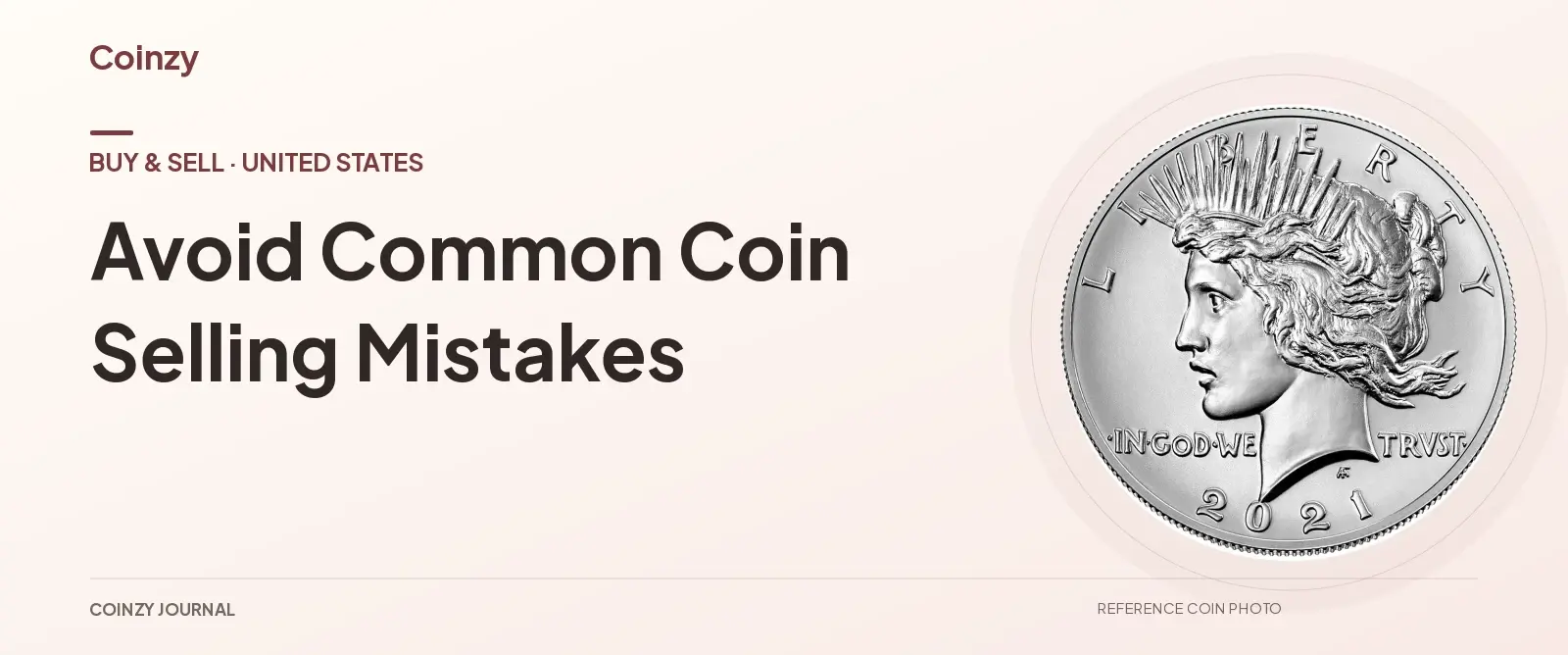
Thumbnail: 2021 Peace dollar obverse.jpg by www.usmint.gov. Public domain. Cropped, resized and composed with title and background.
Avoid common selling mistakes by researching the exact coin, disclosing condition and agreeing the terms before delivery. A successful sale depends on an identifiable item and a clear agreement as well as a price.
What should you know about evaluating a coin sale?
Look for cleaning, scratches and discrepancies between a reference description and your coin. If you are unsure of the grade or variety, explain that uncertainty rather than choosing a premium attribution to improve the advertisement.
Which evidence should you use?
Compare completed sales with the same issue and similar condition. Save the evidence behind the asking price so you can distinguish a reasonable negotiation from a buyer challenging an inaccurate description.
Heritage Auctions: How to BidWhat mistake should you avoid?
A seller’s optimistic grade does not become an independent assessment because it appears in a listing. Avoid presenting an approximate photograph-based judgment as professional certification.
How does this work in practice?
A buyer disputes a mark that was hidden by glare in the original photograph. Clear photographs and a candid condition description would have allowed both parties to discuss the issue before payment.
Before evaluating a coin sale, write down what would make you proceed, what would make you request more evidence and what would make you decline. This is useful when a conversation becomes hurried. A material change in the item or terms should prompt a fresh decision rather than being accepted because you have already spent time on the discussion.
Keep the evidence in the order it was received. Preserve the actual description, the photographs used to agree the transaction and the final terms, including any changes. For evaluating a coin sale, this record makes it easier to explain a concern precisely rather than relying on a recollection that the other party may not share.
Check practical terms separately from the technical coin description. An accurately identified item can still be offered under unsuitable inspection, payment or delivery conditions. Conversely, a convenient payment method does not prove an attribution. Both parts of the decision need an explanation you understand before you commit.
What should your next steps be?
- Check the issue and date before setting a price.
- Use photographs that reveal rather than hide surfaces.
- Distinguish your opinion from certification.
- Agree delivery, inspection and return conditions.
- Keep the final description and payment evidence.
Work through the checklist in order and keep the outcome of each step with your record of evaluating a coin sale. If a step cannot be completed, state the missing information explicitly. This makes it easier to ask for the right photograph, reference or professional opinion instead of substituting a guess.
When is more evidence needed?
Complete a sale only when both parties understand the same item and terms. If a meaningful condition question remains unresolved, better evidence is more useful than a hurried discount.
Frequently asked questions
Can a photograph settle the question on its own?
A photograph can help with evaluating a coin sale, but its usefulness depends on the visible detail and the question being asked. Request complete views and a relevant close-up when necessary. If the outcome depends on an unseen surface, an exact measurement or physical authentication, explain that limitation and seek the appropriate assessment.
What should I keep in my collection record?
Keep the coin’s identification, the images you examined and the source behind the conclusion about evaluating a coin sale. Add the transaction or assessment documents when relevant, and distinguish a confirmed fact from an opinion. Update the record when later evidence changes an important detail rather than silently replacing the original account.
How should you use a professional opinion?
Ask the reviewer to explain the scope of the answer about evaluating a coin sale: what evidence was examined, which conclusion it supports and which questions remain open. Keep that explanation with the original record. A useful opinion should help you choose a next action, such as obtaining a clearer image, checking a reference or arranging physical examination; it should not require you to ignore information that conflicts with the conclusion.
Where can you continue your research?
Browse the Coinzy catalogueRead more collecting guidesUnderstand the Sheldon grading scaleU.S. Mint: Caring for Your Coin CollectionCoinzy Editorial Team
Coinzy publishes practical coin collecting, identification and marketplace guides with links to the references used. Coin-specific authenticity and grading questions may require an independent expert assessment.