How to Store Coins Safely: A Collector’s Guide
CollectingBy Coinzy Editorial Team
· 3 min read
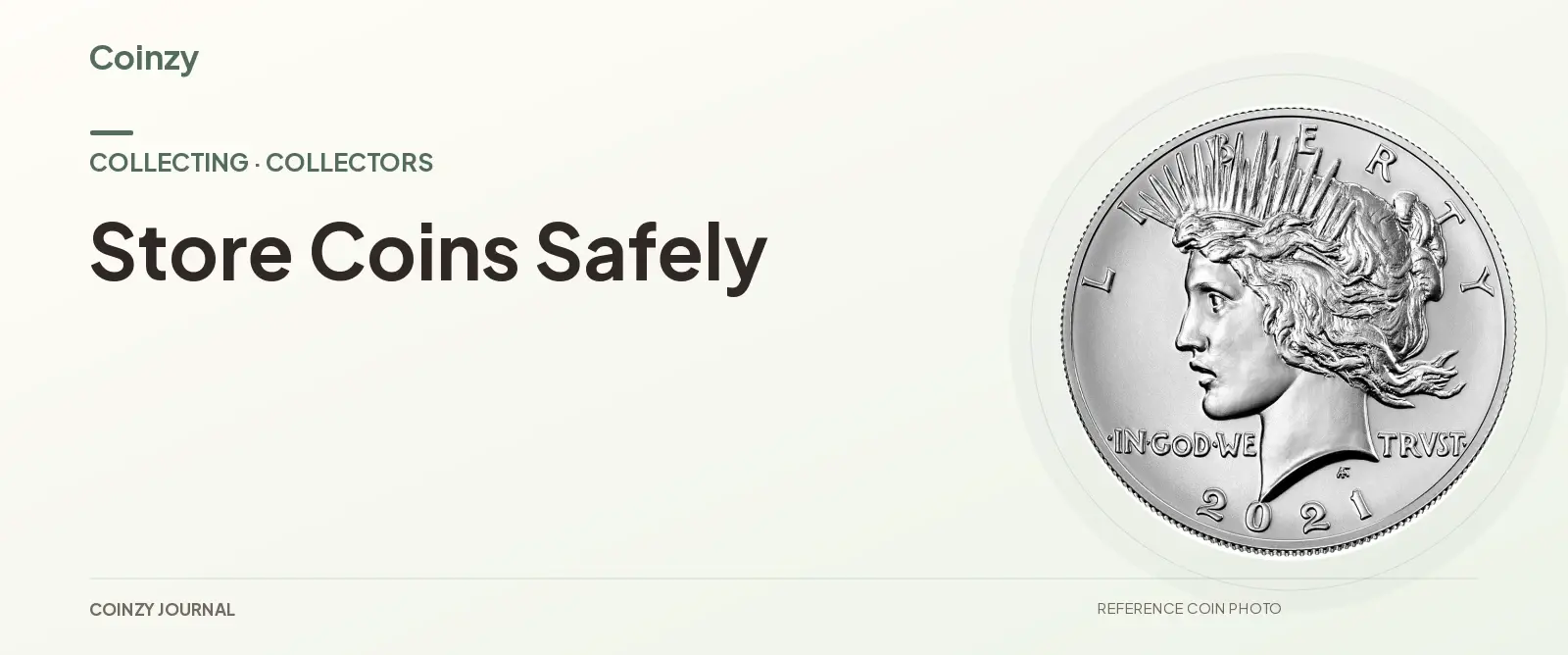
Thumbnail: 2021 Peace dollar obverse.jpg by www.usmint.gov. Public domain. Cropped, resized and composed with title and background.
Store coins in suitable holders in a cool, dry place, and handle them by their edges over a soft surface. The right storage protects the coin’s surfaces and keeps its identifying details and documentation together.
Why does coin storage matter?
A coin’s condition can change when it is exposed to moisture, unsuitable materials, rough handling or frequent temperature changes. Marks and corrosion can affect both its appearance and a collector’s assessment of it. Good storage cannot reverse damage that is already present, but it can reduce avoidable handling and exposure.
The U.S. Mint recommends protecting coins from fingerprints, keeping them cool and dry, and retaining certificates or other documentation that came with them. Different materials react differently, so an unfamiliar or visibly deteriorating coin may need advice from a qualified conservator.
Which coin holder should you choose?
Choose a holder that fits the coin without allowing excessive movement. Common options include individual capsules, purpose-made cardboard holders, tubes for compatible coins and albums. Keep original packaging and certificates for sets when possible; they can be relevant to identification and a future sale.
The U.S. Mint recommends acid-free cardboard and holders free from polyvinyl chloride, commonly called PVC. If a holder is damaged, sticky or poorly suited to the coin, seek appropriate replacement advice. Avoid forcing a coin into a holder that is too small.
How should you handle coins?
Prepare a clean, soft working surface before removing a coin from its holder. Hold the coin by its edges rather than touching the front or back, and keep drinks, food and loose tools away from the work area. Inspect and photograph it without rubbing the surfaces.
A magnifier and good light can help you read the date and mint mark, but avoid metal tools that could scratch the coin. Return the coin to its holder promptly after inspection. If a valuable coin is already sealed in a professional holder, consider whether opening it is necessary before doing so.
Should you clean a coin before storing it?
Avoid polishing or cleaning a collectible coin before you understand its condition and value. The U.S. Mint cautions that cleaning or polishing can reduce value, while rubbing and brushing may scratch the surface. Natural toning can be part of a coin’s appearance; a shiny surface is not automatically more desirable.
If you suspect active corrosion or a harmful residue, consult a qualified coin conservator before trying chemicals or household cleaning methods. Photograph the problem and describe the coin’s material and storage history so the specialist can advise on next steps.
Where should you keep a coin collection?
Choose a secure location with stable conditions and low humidity. Avoid places exposed to leaks, condensation or large temperature swings. Keep holders organized so you do not have to repeatedly remove coins just to identify them.
For a valuable collection, consider the security and insurance arrangements that fit your circumstances. The U.S. Mint suggests checking whether home insurance provides appropriate replacement coverage and notes that a bank safe-deposit box is one possible storage option. Read the actual policy or account terms before relying on either.
What should your collection inventory include?
Record the denomination, date, mint mark, issuing authority, material where known, holder and purchase details. Keep clear images of both sides and note any existing marks without making unsupported claims about grade or authenticity. Link each record to its certificate or receipt if one exists.
Review the inventory when you add, move or sell a coin. A record helps you find the correct item, compare references and explain its history to a future buyer or appraiser. Store a backup separately from the physical collection.
What should you do next?
Start with the coins you handle most often: choose appropriate holders, create a basic inventory and move the collection to a cool, dry place. If you are preparing to sell in India, read our guide to selling safely and verify the buyer before agreeing to a transaction.
How to sell old coins safely in IndiaU.S. Mint: Caring for Your Coin CollectionU.S. Mint: Get Started Collecting CoinsCoinzy Editorial Team
The Coinzy team writes guides on identifying, grading and valuing coins, with links to the reference material used. Coin-specific authentication and grading may require an independent expert assessment.