PCGS vs NGC: How to Compare Coin Grading
Grading & appraisalBy Coinzy Editorial Team
· 4 min read
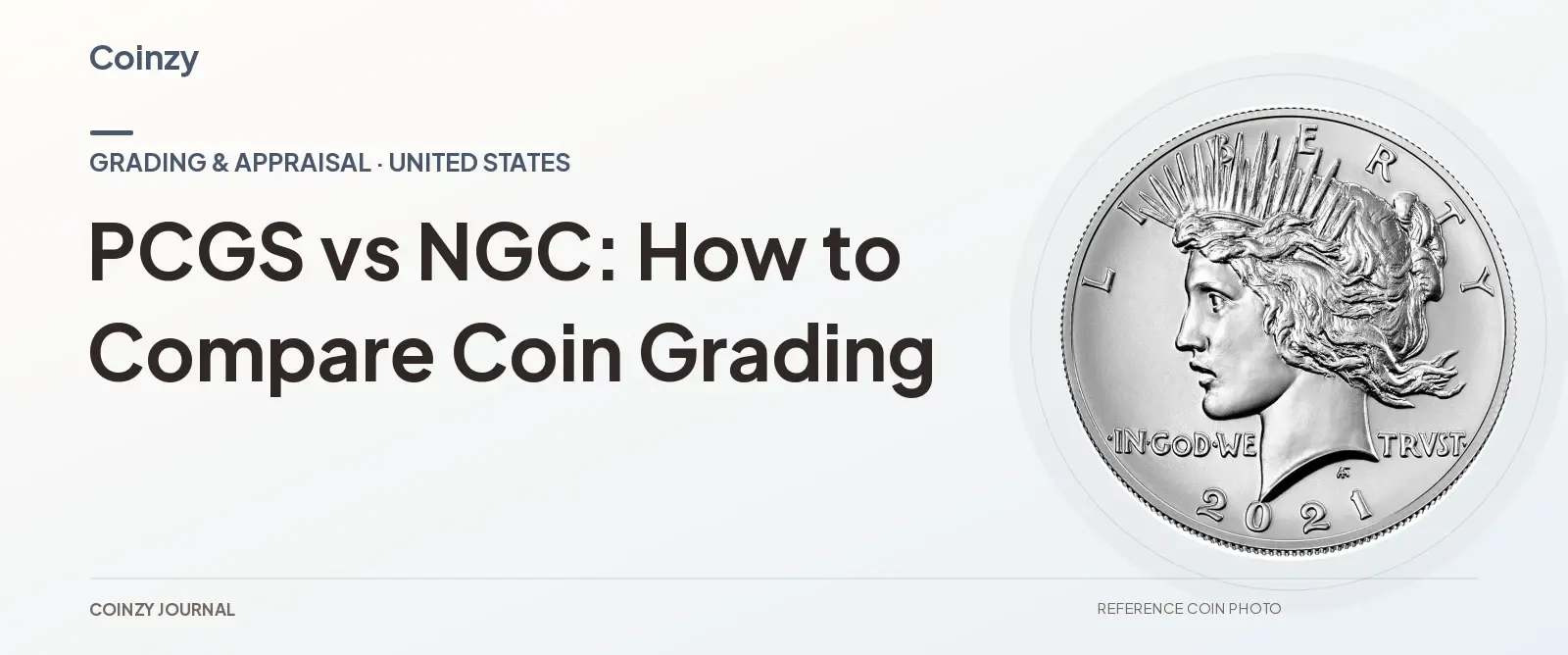
Thumbnail: 2021 Peace dollar obverse.jpg by www.usmint.gov. Public domain. Cropped, resized and composed with title and background.
Compare PCGS and NGC by the service offered for your exact coin, submission requirements and the market evidence relevant to your collecting goals. There is no universal rule that either name guarantees a better outcome for every issue.
What should you know about comparing PCGS and NGC services?
Check whether the coin is eligible for the service, whether attribution is included and how surface problems are reported. Read current submission rules rather than relying on a fee or turnaround estimate quoted by an old article.
Which evidence should you use?
Review the companies’ own grading and submission explanations. When studying sales, compare the same date, variety, grade and surface characteristics instead of assuming the holder alone caused a price difference.
NGC: Coin Grading StandardsWhat mistake should you avoid?
A comparison between unlike coins can produce a false conclusion about the grading company. A scarce variety with exceptional appearance is not a useful match for a common issue in a different condition.
How does this work in practice?
A collector wants a variety attribution but discovers that it is an additional service. Compare the complete submission path, not simply the base grading line, before choosing where to send the coin.
When comparing PCGS and NGC services, separate identification, authenticity, surface condition and market value in your notes. These questions interact, but answering one does not automatically answer the others. A grading explanation can describe preservation without supplying a current buyer, and a price comparison cannot establish the authenticity of an unseen specimen.
Keep the provider’s terminology intact when recording a result. If you simplify it for a listing or inventory, retain the complete label or report alongside the summary. In comparing PCGS and NGC services, removing a qualification may change the meaning even when the shortened description sounds easier to read.
Decide which uncertainty would change your next action. If the decision depends on physical examination, obtain that examination rather than adding precision to a photograph-based estimate. If the question concerns a service’s current rules, ask the provider directly and retain the response with your submission or purchase record.
What should your next steps be?
- Identify the coin and the service you actually need.
- Check eligibility and current submission instructions.
- Compare all applicable grading and delivery costs.
- Read how authentication and surface problems are reported.
- Use comparable sales relevant to the particular issue.
Work through the checklist in order and keep the outcome of each step with your record of comparing PCGS and NGC services. If a step cannot be completed, state the missing information explicitly. This makes it easier to ask for the right photograph, reference or professional opinion instead of substituting a guess.
When is more evidence needed?
Choose the service that fits the coin and your intended use of the result. An expected grade remains an expectation until the professional assessment is complete.
Frequently asked questions
Can a photograph settle the question on its own?
A photograph can help with comparing PCGS and NGC services, but its usefulness depends on the visible detail and the question being asked. Request complete views and a relevant close-up when necessary. If the outcome depends on an unseen surface, an exact measurement or physical authentication, explain that limitation and seek the appropriate assessment.
What should I keep in my collection record?
Keep the coin’s identification, the images you examined and the source behind the conclusion about comparing PCGS and NGC services. Add the transaction or assessment documents when relevant, and distinguish a confirmed fact from an opinion. Update the record when later evidence changes an important detail rather than silently replacing the original account.
How should you use a professional opinion?
Ask the reviewer to explain the scope of the answer about comparing PCGS and NGC services: what evidence was examined, which conclusion it supports and which questions remain open. Keep that explanation with the original record. A useful opinion should help you choose a next action, such as obtaining a clearer image, checking a reference or arranging physical examination; it should not require you to ignore information that conflicts with the conclusion.
Where can you continue your research?
Browse the Coinzy catalogueRead more collecting guidesUnderstand the Sheldon grading scaleU.S. Mint: Caring for Your Coin CollectionCoinzy Editorial Team
Coinzy publishes practical coin collecting, identification and marketplace guides with links to the references used. Coin-specific authenticity and grading questions may require an independent expert assessment.