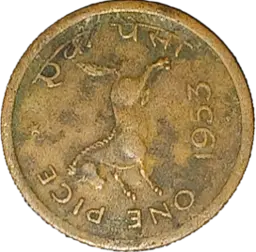
Ancient Roman coins
14k+ coins · up to $50,000
Browse Catalogue
Explore popular collecting categories, from ancient Roman to rare American.



Want to check your coins value? Get it evaluated first, then list to verified buyers.

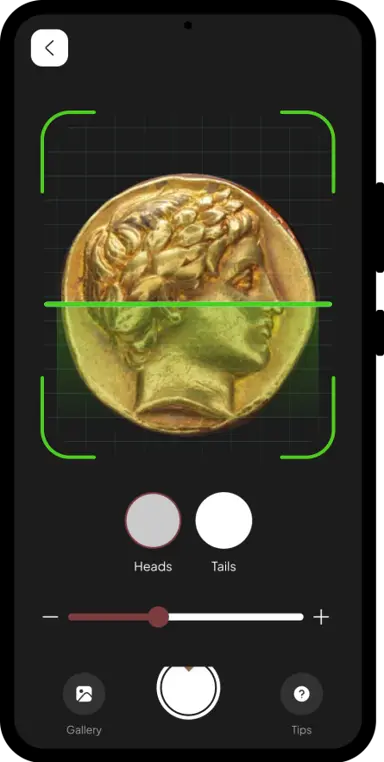
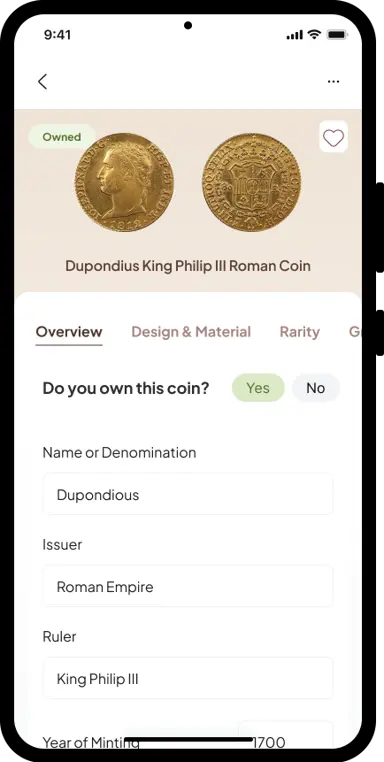
MOBILE APP
Identify coins using your camera. Your collection syncs across devices.
1M+
Daily users
4.3+★
User feedback rating
1.5M+
Items cataloged
20K+
Community members


Estimated Value
Based on recent market data

$90 – $100
Name or Denominations
150 Rupees 150 INR = USD 1.73
Issuer
India
Ruler
Republic (1950-date)
Year of Minting
2019
Currency
Rupee (decimalized, 1957-date)
Shape
Round
Rarity
Rare
Weight
40 g
Diameter
44 mm
Thickness
2 mm
Material
Silver (.999)
Shape
Round
Edge Type
200 Serrations
Technique
Milled
Front design
Ashoka Lion Pedestal, denomination below.
Back design
Logo of 150 Years of Celebrating The Mahatma
Year of Minting
2019
Ruling authority
Republic (1950-date)
Mint location
NA
Mint mark
NA
Orientation
Medal alignment ↑↑
Inscriptions
Obverse: भारत INDIA सत्यमेव जयते ₹ 150 Reverse: 150th Birth Anniversary of Mahatma Gandhi 1869 - 2019
Context
Mohandas Karamchand Gandhi also known as Mahatma Gandhi was born on 2 October 1869 in Porbandar, Coastal Gujarat, Western India. He was an Indian lawyer, anti-colonial nationalist and political ethicist, who employed non-violent resistance to lead the successful campaign for India's independence from British rule and in turn inspired movements for civil rights and freedom across the world. Mahatma Gandhiji's birthday, 2 October, is commemorated in India as Gandhi Jayanti, a national holiday, and worldwide as the International Day of Nonviolence. Gandhiji is considered the Father of the Nation in India and was commonly called Bapu. His contribution to Indian freedom movements and his championship of non-violence earned him the title of “Father of the Nation” or “Bapu”. During the Indian freedom struggle, Mahatma Gandhi advocated many peaceful protests and demonstrations. These protests were conducted with the principle of non-violence (ahimsa). Mahatma Gandhi led a non- violent freedom struggle in India. He had come to India in 1915 after leading peaceful protests in South Africa against the racist policy of the South African government. By the time, he came to India ha had already gained a respectful stature among the Indian people. Such philosophy of life helped him in developing his philosophy of Education which can be the true source of inspiration for the present system of education. Gandhiji's Basic Principles of Education includes: i)From 7 to 14 years of age, education of each child should be free, compulsory and universal. Every Indian needed at least 13 yards of cloth per year. Gandhiji believed that multiplication of mills could not solve the problem of cloth supply; therefore he stressed the development of Khadi industry. For Gandhiji, khadi was the “symbol of unity of Indian humanity of its economic freedom and equality”. Today, Gandhiji is remembered for his passionate adherence to the practice of non-violence and his supreme humanism, in every corner of the world. He said, 'Many ancient Indian masters have preached ahimsa, non-violence as a philosophy. Mahatma Gandhi, who fought tooth and nail, sans violence, for India's freedom adhered to six principles in life Truth, Non-violence, Vegetarianism, Brahmhacharya, Simplicity and Faith. Mohandas Karamchand Gandhi is widely recognized as one of the twentieth century's greatest political and spiritual leaders. Honored in India as the father of the nation, he pioneered and practiced the principle of Satyagraha—resistance to tyranny through mass nonviolent civil disobedience. Mint Marks: ♦ - In uncirculated coin M - In Proof coins
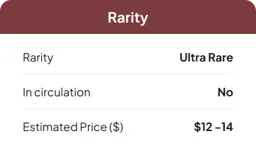
Rarity
Rare
Coin type
Non-circulating
In circulation
Yes
Demonetized
No
Marketplace listings
0

Subscribe to Premium
Unlock more coin details with Premium.