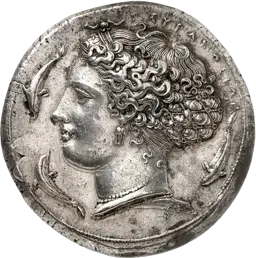
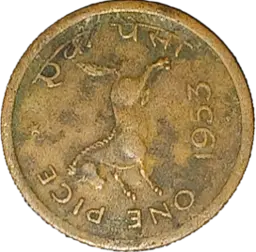
Ancient Roman coins
14k+ coins · up to $50,000
Browse Catalogue
Explore popular collecting categories, from ancient Roman to rare American.



Want to check your coins value? Get it evaluated first, then list to verified buyers.



MOBILE APP
Identify coins using your camera. Your collection syncs across devices.
1M+
Daily users
4.3+★
User feedback rating
1.5M+
Items cataloged
20K+
Community members


Estimated Value
No recent market data yet
Name or Denominations
300 Dollars 300 CAD = USD 209
Issuer
Canada
Ruler
Elizabeth II (1952-2022)
Year of Minting
2018
Currency
Dollar (1858-date)
Shape
Round
Rarity
Ultra rare
Weight
31.15 g
Diameter
30 mm
Thickness
2.5 mm
Material
Platinum (.9995)
Shape
Round
Edge Type
Reeded
Technique
Milled , Coloured
Front design
Head of Queen Elizabeth II, as at 77 years of age, bare headed, wearing necklace and earrings, facing right.
Back design
Two Maple Leaves
Year of Minting
2018
Queen
Elizabeth II (1952-2022)
Mint location
Royal Canadian Mint of Ottawa , Canada (1908-date)
Mint mark
NA
Orientation
Medal alignment ↑↑
Inscriptions
Obverse: ELIZABETH II D•G•REGINA SB 300 DOLLARS Reverse: CANADA 9995 2018 PL PLATINUM 1 OZ PLATINE
Context
Beautifully reproduced twice rather than once on this 99.95% pure platinum coin, the sugar maple leaf is a deeply evocative symbol for Canadians. This is the first coin of its kind with selective gold plating on the reverse, obverse and bead. Evoking autumnal light, this touch of gold creates a spectacular effect with the reverse proof finish, which highlights the fine engraving of the leaves embodying history, identity and pride. Did you know? The first documented use of the maple leaf as a Canadian cultural symbol dates back to 1836, when the newly-founded Société Saint-Jean-Baptiste made it its emblem. All Canadian circulation coins issued between 1876 and 1901 featured a maple leaf. The maple leaf was featured on the reverse of our one-cent coin until it was withdrawn from circulation in 2014. In 1860, a maple leaf was added to the badge of the 100th Regiment of Foot (Prince of Wales' Royal Canadian). It appeared on the badge of the Canadian Expeditionary Force during the First World War, and on the badges and equipment of many Canadian servicemen during the Second World War. Maple leaves appear in many provincial coats of arms and flags, but none is as famous as the one that sits at the center of the Canadian flag! After years of deliberation and heated debate, during which thousands of designs were proposed, the red and white Maple Leaf flag was adopted on February 15, 1965. Since then, this date has marked National Flag of Canada Day. Packaging The coin is encapsulated and presented in a lacquered red wooden box featuring the Royal Canadian Mint logo. The case is accompanied by a black protective box. This is an automatic translation. The original text is: Magnifiquement reproduite deux fois plutôt qu’une sur cette pièce en platine pur à 99,95 %, la feuille d’érable à sucre est un symbole profondément évocateur pour les Canadiens. Il s’agit de la première pièce en son genre avec un placage d’or sélectif sur le revers, l’avers et le cordon. Évoquant la lumière automnale, cette touche d’or crée un effet spectaculaire avec le fini épreuve inverse, qui met en valeur la fine gravure des feuilles incarnant histoire, identité et fierté. Le saviez-vous? La première utilisation documentée de la feuille d’érable en tant que symbole culturel canadien remonte à 1836, quand la Société Saint-Jean-Baptiste, nouvellement fondée, en a fait son emblème. Toutes les pièces de circulation canadiennes émises entre 1876 et 1901 présentent une feuille d’érable. Cette dernière a d’ailleurs figuré au revers de notre pièce de un cent jusqu’à son retrait de la circulation, en 2014. En 1860, une feuille d’érable a été ajoutée à l’insigne du 100e Régiment de Fantassins (Prince of Wales’ Royal Canadian). Elle a fait son apparition sur l’insigne du Corps expéditionnaire canadien pendant la Première Guerre mondiale, puis sur les insignes et l’équipement de nombreux militaires canadiens durant la Seconde Guerre mondiale. Les feuilles d’érable figurent dans plusieurs armoiries et drapeaux provinciaux, mais nulle n’est aussi célèbre que celle qui trône au centre du drapeau canadien! Après des années de délibérations et de débats enflammés pendant lesquelles des milliers de motifs ont été proposés, l’unifolié rouge et blanc a été adopté le 15 février 1965. Depuis, cette date marque le Jour du drapeau national du Canada. Emballage La pièce est encapsulée et présentée dans un coffret de bois rouge laqué orné du logo de la Monnaie royale canadienne. Le coffret est assorti d’une boîte protectrice noire.
Rarity
Ultra rare
Coin type
Non-circulating
In circulation
Yes
Demonetized
No
Marketplace listings
0

Subscribe to Premium
Unlock more coin details with Premium.