Ancient Roman coins
14k+ coins · up to $50,000
Browse Catalogue
Explore popular collecting categories, from ancient Roman to rare American.



Want to check your coins value? Get it evaluated first, then list to verified buyers.

MOBILE APP
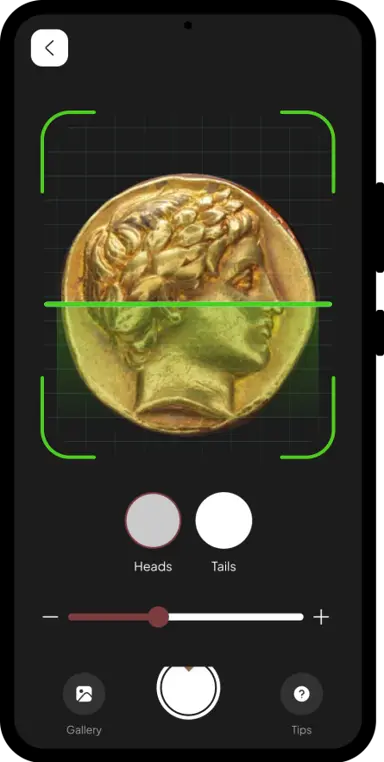
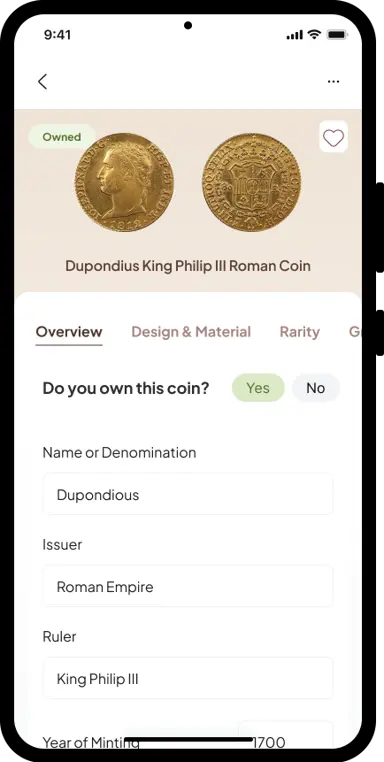
Identify coins using your camera. Your collection syncs across devices.
1M+
Daily users
4.3+★
User feedback rating
1.5M+
Items cataloged
20K+
Community members


Estimated Value
No recent market data yet
Name or Denominations
Æ25 - Gaius Sosius[?]
Issuer
Island of Zacynthus (Achaea)
Ruler
Republic (509 BC - 27 BC)
Year of Minting
NA
Currency
Drachm
Shape
Round (irregular)
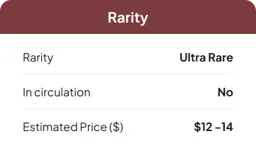
Rarity
Ultra rare
Weight
14.28 g
Diameter
25.47 mm
Thickness
NA
Material
Bronze
Shape
Round (irregular)
Edge Type
NA
Technique
Hammered
Front design
NA
Back design
Fiscus, sella quaestor and hasta
Year of Minting
NA
Ruling authority
Republic (509 BC - 27 BC)
Mint location
NA
Mint mark
NA
Orientation
Medal alignment ↑↑
Inscriptions
Reverse: Q
Context
This enigmatic bronze dates to the late Republic. We're not entirely sure where it was minted or for whom, leaving us to speculate on its origins. Scholars have suggested that this is either Brutus, Julius Caesar, Octavian or the Syrian governor Gaius Sosius. Julius Caesar and Brutus were two early candidates, both having struck a variety of bronze issues in the east. The reverse showing political items highly resembles that of the questor Aesillas, who struck silver tetradrachms in Macedon during the late 90's to early 70's BC (HGC 3, 1110). The similarities between the two have led some scholars to speculate that the series is Macedonian in origin. M. Grant, in his work 'From Imperium To Auctoritas, A Historical Study of Aes Coinage In The Roman Empire, 49 BC-AD 14', proposed that M. Acillus served as governor of Macedonia in 45/44 and struck coins with Caesar's portrait. This is only speculation however and no coins of these types have ever been found in Macedonia. Our third candidate is Gaius Sosius, a quaestor under Mark Antony in 39. He issued coins on the island of Zacynthus bearing the legend 'C SOSIVS Q'. These coins coincide with the dating of the series in question, to around 39 BC. Both issues including a Q to denote that the issuer was a questor. And finally, Octavian, who is the final candidate. The find data available to us supports the mint being somewhere in Asia Minor. There are coins attributed to the region of Cilicia that show remarkable stylistic similiarities to this type. These issues depict a bust of a man looking right, with the legend “PRINCEPS FELIX”, suggesting the person is Augustus. The reverse legend of these types, “VE TER/ COLONIA / IVLIA II VIR“ and “COLONIA/IVLIA, II VIR VE TER” respectively, provides us with the name of a possible mint location (See RPC I 4082, 4083). RPC I 4082 (Cited from: https://www.cointalk.com/threads/a-mysterious-provincial-of-the-late-republic.383999/)
Rarity
Ultra rare
Coin type
Standard circulation
In circulation
No
Demonetized
Yes
Marketplace listings
0

Subscribe to Premium
Unlock more coin details with Premium.